

Words from the wise
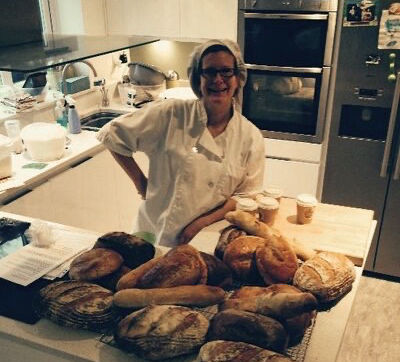
For the homebaker, or those who want to dabble. There's nothing better than listening to experience. So we have compiled some tried and tested, proven to work exceptionally well (with a professional chefs guarantee), instructions from Jo the Baker and previous proprieter of this very bakery.


Great tasting results....
Info for the Home Baker
If you want to get a sourdough on the go, you will have to think in advance. You will need to prepare your starter well in advance. A well maintained and well developed starter will drastically improve your results.
To get a starter going you will need two things. A good strong flour and water, UK tap water is fine at home.
For Jo's Recipe you require a 300g starter. But you dont need to make that all at once, you build it up.
Day 1 – Create the starter
Mix in a small jar or bowl:
-
30 g flour
-
20 g water
This is 67% hydration. Otherwise known as a stiff starter, milder acidity and strong gluten support.
Mix until a rough dough forms. Press into the jar, cover loosely, and keep ambient for an extended period before putting in sealed container in fridge.

Day 2 – First feeding
Remove from fridge and pop seal on container. Leave loosely covered at room temperature until you see a few bubbles or smell something slightly tangy or fruity.
Discard all but 30 g of starter.
Add:
-
30 g flour
-
20 g water
Mix, knead briefly, and return to jar.
Total: ~80 g
Cover loosely, and keep ambient for an extended period before putting in sealed container in fridge.

Day 3 – Second feeding
Remove from fridge allow to acclimate and starter should show:
-
Light rise
-
Bubbles when torn open
-
Slightly sour smell
Discard all but 40 g starter.
Add:
-
40 g flour
-
26 g water
Hydration: ~65%
Total: ~106 g
Keep ambient untill you see a visible 25% growth in size, then return to the fridge.
"Bread is the king of the table, and all else is merely the court that surrounds the king." - Louis Bromfield
Day 5 – Strengthening build
Starter should now:
-
Rise reliably (50–100%)
-
Smell clean, mildly sour
-
Show stretchy interior when pulled apart
Discard all but 60 g starter.
Add:
-
60 g flour
-
40 g water
Total: ~160 g
Keep ambient untill you see a visible 25% growth in size, then return to the fridge.
DAY 7 – FINAL BUILD (to 350 g)
Remove from fridge and allow to acclimate.
Use all 160 g starter.
Add:
-
91 g flour
-
59 g water
This brings the totals to:
-
Flour: ~211 g
-
Water: ~139 g
-
Final weight: ~350 g
-
Hydration: ~66%
Knead briefly until smooth. Mark the container.
Your stiff starter is ready when:
-
It rises 50–75% (not always double with stiff starters)
-
The top domes slightly, then just begins to flatten
-
Interior is webby and elastic when cut
-
Smell is clean, wheaty, mildly sweet-sour
Typically ready 8–12 hours after the final build, depending on temperature. So you can leave overnight loosely covered or after allowing a few hours of fermentation return to fridge. This will respectively change wether you bake your loaf on day 8 or 9.
Note: The fermentation process is dependant on time and temperature and may vary depending on the enviroment. For instance if your fridge is very cold, then it may be that the starter needs longer ambient rest of an extra day in the fridge.

THE GREAT WHITE! No Knead Sourdough – Makes Two Loaves
Jo's recipe from https://josloaves.co.uk/lockdown-loafers/
Take a large bowl and mix the following ingredients until into a dough until all the dry flour has been mixed in. It will be sticky!
300g – Active sourdough starter (Put the spare 50g back in the fridge as seed for the next starter build!)
1000g – Strong bread flour
600g – Water (If using wholemeal flour, add 100g more water and/or adjust flour weight)
Cover and leave for 40 minutes and then sprinkle in:
16g – Salt
Fold the salt into the dough by gently stretching and pulling it over itself until you no longer feel any gritty bits. Cover and leave for another 40mins – 1 hour, then stretch and fold the dough again. Cover and either put into the fridge* for 12 to 24 hours or carry on with the next steps.
[Non-fridge]: Rest the dough for around 3 hours. Each hour, stretch and fold the dough by pulling out one of the sides and fold it back on itself over the top of the main bulk of dough and then repeating for the remaining 3 sides. You should feel the dough tightening as you do this. Keep the dough covered.[Fridge] Take out, then do one stretch and fold before the next step.When all the stretch and folds are done, remove the dough, and on a lightly floured worktop, divide equally into 2 and shape. Place into greased tins or floured or lined proving baskets. Make sure these are covered with oiled cling film or shower caps and leave to rise in an ambient room for 2 – 5 hours, depending upon the time of year, whether your dough came from the fridge and your kitchen temperature.
The loaves are ready to bake when the dough has risen appreciably and a depression made by a floury finger is very slow to be pushed back out. Make sure you heat up your oven to the highest setting (250°C +) with baking stones in (if using) for at about half an hour before you bake. Carefully open the oven door and turn the loaves out on to the stone (if not using tins) and slash the dough with a razor-type blade. Immediately spray the inside walls of the oven with water to create steam. Set the oven to 240°C for and bake for about 30 minutes. An alternative to spraying water is to preheat a tray in the bottom of the oven and then fill with hot water just before you put the loaves in. Remove the tray after 10 minutes of baking as this helps to keep a nice crust. Loaves are baked when they have a nice hollow sound when they are tapped with a knuckle; you can also hear a well-baked loaf as the crust crackles!